Maze & Friends is your employer branding agency from Vienna. We build employer brands with the people who actually work for you: recruiting video and employee photos, careers page and social recruiting, measured in applications. Good people apply where they can see what the work is like.
In short: Employer branding means building an employer brand, the sum of all impressions people have of your company as a place to work. It connects the internal substance, what the work really feels like, with external visibility through the careers page, recruiting video, social media and employee voices. Maze & Friends, the marketing agency from Vienna, handles the external half from one source, from uncovering the substance to the ongoing campaign.
The role has been advertised for months, the applications don’t fit, and the competitor a few towns away seems to hire with ease. Pay is rarely the reason. Usually it is a visibility problem: candidates research like customers, and if all they find online is a list of vacancies with a stock photo, they apply elsewhere.
On top of that, sought-after skilled workers aren’t actively looking. People with a good job don’t read job boards, but they do scroll through their feeds in the evening. And anyone who asks ChatGPT what you are like as an employer gets an answer built from whatever is publicly readable about you.
You pay for unfilled roles every month in lost orders, overtime and nerves, and in the end a recruitment agency often steps in. Yet your company has plenty to show. Nobody gets to see it.
We find out what is genuinely different about working for you. To do that, we talk to employees from different departments and distil their answers into core statements more concrete than “flat hierarchies”. Every further measure stands on this foundation.
Real employees at real workplaces, 60 to 120 seconds long, plus vertical short versions with subtitles for ads. We shoot the interviews first, then the work situations, documentary rather than staged. One video for everyone reaches no one, so when in doubt, each target group gets its own cut.
Portraits, teams and workplace shots for the careers page, job ads and LinkedIn, ideally on the same day as the video shoot. Applicants spot stock photos at a glance. And the smile from the picture library has never worked a day at your company.
The landing page of your employer brand shows people first and openly answers what applicants want to know: pay, process, day-to-day work. Add a short application form with no hurdles. Because many applicants arrive on their phones, we design the page for mobile and use job titles that candidates actually search for.
Job campaigns on Facebook, Instagram and LinkedIn, targeted regionally at people who aren’t looking but would switch. A short form replaces the applicant portal with its login, so interest turns into a conversation.
We measure careers page visits, applications per role, cost per application and the quality of the interviews. Once there is enough data, it becomes clear which message works. Then we shift budget instead of letting it run on.
We clarify which roles are hardest to fill, whom you want to reach and what already exists. Then you get a fixed-price quote.
First we talk to employees from different departments. Why are they here, and what would they tell a friend about the job?
The conversations shape the structure, the copy and open answers on pay, process and day-to-day work. Photos and video from the shoot day complete the page.
One production day yields the recruiting video, short versions and employee photos. We only use what the people shown have approved.
Once the careers page and material are in place, the campaigns launch. From then on, reply to applicants on the same day if you can. Good candidates are gone fast.
Every month we evaluate visits, applications and interview quality. Whatever doesn’t work, we rebuild instead of letting it run on.
Employer branding answers, for the long term, why someone should work for you. Recruitment marketing promotes specific roles through ads, campaigns and job boards. Without an employer brand, recruitment marketing advertises a company nobody knows, which is why the brand work comes first.
You can only show on the outside what exists on the inside. Leadership, culture and onboarding are yours to shape, and you don’t need an agency for that. Our job is the honest translation to the outside world. A glossy campaign about a culture that doesn’t exist is exposed by the end of the probation period at the latest, so we don’t build one.
We don’t replace an HR department either. Selection, interviews and offers stay with you. Our job is to make sure enough of the right people notice you and get in touch without hurdles.
Shift supervisors, fitters, technicians: sought-after profiles who don’t read job boards. We show the factory floor, the machines and the people as they are. Reality doesn’t scare off the right ones.
Businesses competing against bigger names around their own location. Credible closeness is an advantage there, and even small budgets create a noticeable presence.
High turnover, young audiences: short vertical formats and a recruiting spot show the team before anyone applies, as with ONO Bowl & Tea in Wiener Neustadt.
If you sell quality, you need people who can make it. These specialists have options and choose their employer themselves. Show them what they would be working on with you, and to what standard.
Industries
Regions
The questions people ask before deciding on employer branding, and the answers that bring clarity.
Employer branding is building an employer brand, meaning the work on how your company is perceived as a place to work. The aim is to attract the right skilled people and keep good ones. It covers the internal substance, what the work really feels like, and its visibility outside through the careers page, recruiting video, social media and employee voices. You have an employer brand even if you do nothing about it. Then it consists of a dated careers page, a few anonymous reviews and whatever people say about you locally.
An employer branding agency translates what makes your company a good employer into a careers page, recruiting video, photos and campaigns, and measures whether they lead to applications. Advice and execution belong together. It starts with conversations with employees, from which concrete core statements emerge. The internal substance, meaning leadership and culture, is yours to shape; you don’t need an agency for that. Support pays off when you lack time or production experience in-house. Make sure the agency can show real people instead of assembling stock footage. Selection and offers stay with you.
The cost of employer branding depends mainly on whether a usable careers page and good material already exist or you are starting from zero. The biggest items are shoot days for video and photos, rebuilding the careers page and the ad budget for social recruiting, which goes straight to the platforms. We bill projects once; ongoing support has a three-month minimum term and is then cancellable monthly. You get the fixed-price quote after the free initial call. A useful benchmark is the cost of a role that has been vacant for months.
Employer branding builds the company’s brand as an employer; employee branding starts with the employees themselves. It means employees embody the brand in everyday work and carry it outwards, for example with their own posts on LinkedIn. The two are connected, because the voices of real colleagues are believed differently from company messages. You can’t order it. You make it possible with good material and freedom in people’s own tone. If you want to build up employees as voices deliberately, you will find that under corporate influencers in our personal branding service.
Employer branding rests on four core measures: clarify the substance, build out the careers page, show real people in the recruiting video and spread the content through social recruiting. The order matters. The careers page becomes the landing page for every campaign. Add employee photos instead of stock images and well-kept reviews on Kununu, the DACH region’s Glassdoor, and on Google. A single campaign without this foundation usually burns budget. Where you start depends on where applicants drop off today. Our guide gives an overview of all employer branding measures in order.
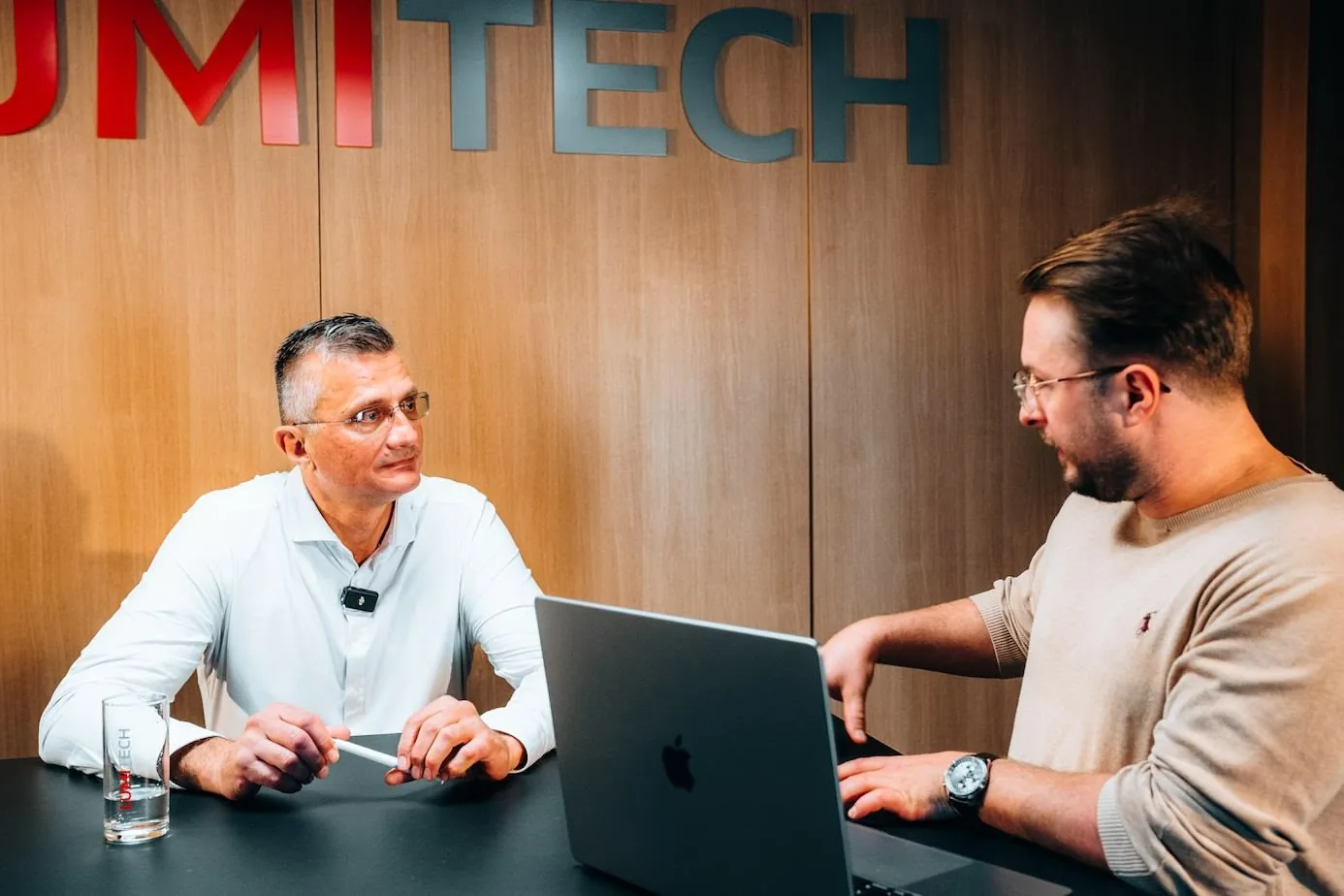
Good employer branding examples show real employees at real workplaces explaining in their own words what they do. The counter-example is the film with hired actors and the line that people come first. A salary range in the job ad instead of “competitive pay” works too, as does a managing director who explains personally why a role is being filled. At ONO Bowl & Tea in Wiener Neustadt, a recruiting spot shows the team before anyone applies, and Lumitech uses its corporate film, with interviews from every level, for customers and applicants alike.
How quickly employer branding works depends on the lever: campaigns and a better careers page work early, while the brand effect builds over months. A reworked careers page has an immediate effect on everyone already looking into you. Paid social recruiting campaigns often bring the first applications soon after launch and can be judged reliably after a few weeks. Getting people to come forward on their own, including speculative applications, takes consistent visibility over months. Confuse the two and you stop too early. That is why we make no firm promises about applicant numbers; we show you every month what lands.
You measure employer branding with KPIs along the application path, from the careers page to the hire. What matters are careers page visits, applications per role, cost per application, the share of applications that reach an interview and the time to hire. In the long run, the most telling question is where new employees first heard of you, and for all other figures you need clean, GDPR-compliant tracking. We evaluate these figures monthly and shift budget as soon as it becomes clear which message works.
Employer branding often works particularly well for small companies and SMEs, because a manageable team can show credibly who works there. A small business usually competes around its own location rather than nationwide; there, even small budgets create a noticeable presence, and the personal touch of a small team is an advantage in the feed against big names. What matters is that the careers page and application process are in place before the first campaign runs. A short application without a login and a quick reply often weigh more than any glossy video. At ONO Bowl & Tea in Wiener Neustadt, a recruiting spot brought more applications.
If employees don’t want to appear in the video, explain in advance exactly what will be asked and promise that nothing will be used without their approval. Reluctance is usually uncertainty, not refusal. In interviews, we work without memorised lines, and anyone who would rather not speak can be shown at work instead. Participation stays voluntary, without exception. In our experience, every business has enough voices, and hesitant colleagues often join in on their own once they see the first result. A recruiting video works best with a few honest voices.
The best platform for social recruiting is the one where your target group spends its free time. For trade and technical jobs, there is hardly a way around Facebook and Instagram, while LinkedIn adds reach for specialist and management roles in office settings. Apprentices and very young audiences are best reached with short vertical formats that don’t look like recycled ads. The platform matters less than content that doesn’t sound like advertising, and a short form instead of an applicant portal. A login costs you many interested people on mobile.
Social recruiting means filling vacancies through social networks such as Instagram or LinkedIn instead of only waiting for applications via job boards. At its core, it targets people who aren’t actively looking but would switch. The ads run around your location and lead to a short application with no hurdles. Unlike active sourcing, you don’t message anyone individually; interested people come forward themselves. Social recruiting works best on top of a strong employer brand, because anyone who clicks the ad then checks your careers page and reviews.
Employer branding answers, for the long term, why someone should work for you; recruitment marketing promotes specific roles through ads and job boards. Recruiting is the step after that, from selection to hiring. Without an employer brand, recruitment marketing advertises a company nobody knows, which is why the brand work comes first. In practice, the two interlock: the brand supplies message and material, recruitment marketing supplies reach. We take on the employer brand and recruitment marketing, while selection and offers stay with you. So we don’t replace an HR department; we make sure enough of the right people get in touch.
A good recruiting video lets employees tell in their own words what their job feels like and shows the workplace as it is. For the careers page, 60 to 120 seconds makes sense; for ads, vertical short versions with subtitles. We shoot the interviews first and then the work situations, documentary rather than staged. One video for everyone reaches no one, so when in doubt each target group gets its own cut, for example apprentices and skilled workers separately. Concrete information on shift patterns or training works better than values on slides. As with a brand film, costs depend on shoot days and the number of cuts.
A good careers page shows people first and then gives open answers to what applicants want to know, above all about pay and day-to-day work. Add job titles that candidates actually search for and a short application without a login. Because many applicants arrive on their phones, we design the page for mobile. Employee photos and a recruiting video replace stock images, which applicants spot at a glance. The careers page is the landing page for every campaign and should be in place before the first euro goes into social recruiting, and structured job data also helps search engines display your vacancies correctly. Our guide shows how to optimise an existing careers page.
An employer value proposition, or EVP, is the employer promise: the core of what employees get with you and what sets you apart from other employers. A good EVP is concrete and verifiable, such as a shift pattern that works for families, or projects nobody else lets you work on. Clichés like “flat hierarchies” fall flat, because every employer promises them. We develop the EVP from conversations with employees from different departments and ask what they would tell a friend about the job. That produces core statements for the careers page and ads. An EVP that isn’t true internally is exposed by the end of the probation period at the latest.
You recognise a good employer branding agency by advice that starts with conversations with your employees, with campaigns only coming afterwards. Ask for examples with real employees instead of stock footage, and ask how success is measured: by applications and filled roles, not by likes. A reputable quote separates one-off production from ongoing support and lists the ad budget separately, so you can see what you are paying for. Check who will actually look after your project. At Maze & Friends, the senior people from the initial call also work on your project. A good agency will also tell you when the problem is internal, in onboarding, for example.
Maze & Friends is an employer branding agency from Vienna and works for companies across Austria and the DACH region. We run social recruiting campaigns around your location, because applicants rarely want a long commute. Filming and photography take place on site at your premises, while concept and coordination also work remotely. One example from Lower Austria is ONO Bowl & Tea in Wiener Neustadt, with a recruiting spot. Lumitech uses its corporate film to reach customers and qualified employees in its region. For regional businesses, closeness is an advantage when they compete against bigger names.
As a rule, you should stop actively promoting photos and videos of former employees after they leave, unless the consent explicitly covers that. That is why every shoot needs written consent setting out the purpose and duration of use. Consent can be withdrawn. Plan the material so that individuals can be replaced, with several voices instead of a single face for the campaign. Group shots and work scenes without one main person usually stay usable for longer. Your data protection adviser handles the legal review of individual cases; we align the shooting plan and selection with it.
With us, building an employer brand takes six steps: initial call, uncovering the substance, careers page, shoot day, social recruiting and monthly evaluation. First we talk to employees from different departments, because the camera comes after the conversations. Their answers produce the core statements and the structure of the careers page; then, on one production day, we shoot the recruiting video and employee photos, and we only use what the people shown have approved. The campaigns only start once the page and material are in place. After that, we evaluate applications and interview quality every month and rebuild whatever doesn’t work.
More technical terms, briefly explained: Marketing glossary
In a free 30-minute call, we work out where you can make the quickest impact. Then you get a concrete roadmap and a fixed-price quote. Consulting that also delivers.