Maze & Friends is your email marketing agency from Vienna for newsletters and automations that get read because they have something to say. We build flows from the welcome to the win-back and measure how much of it arrives as revenue or enquiries.
In short: Email marketing is communication with customers and prospects by email, as a newsletter campaign or as an automated flow that responds to a behaviour, such as a sign-up or a purchase. Maze & Friends is an email marketing agency from Vienna and builds newsletters and marketing automation, in Klaviyo for example, with content from the same team that also produces film and guides.
Many companies have years’ worth of contacts in their systems, from existing customers to trade fair visitors. They are rarely written to. And when they are, it is a catch-all newsletter that is the same for everyone and therefore suits hardly anyone.
Yet this channel belongs to you. No feed decides who sees your message, and no platform changes the rules overnight on how you may reach your own customers.
What is usually missing is the flow behind the tool: a welcome for new contacts, a reminder about the abandoned basket, a follow-up after the initial call. Flows like these work every day, even when nobody on the team is thinking about the newsletter.
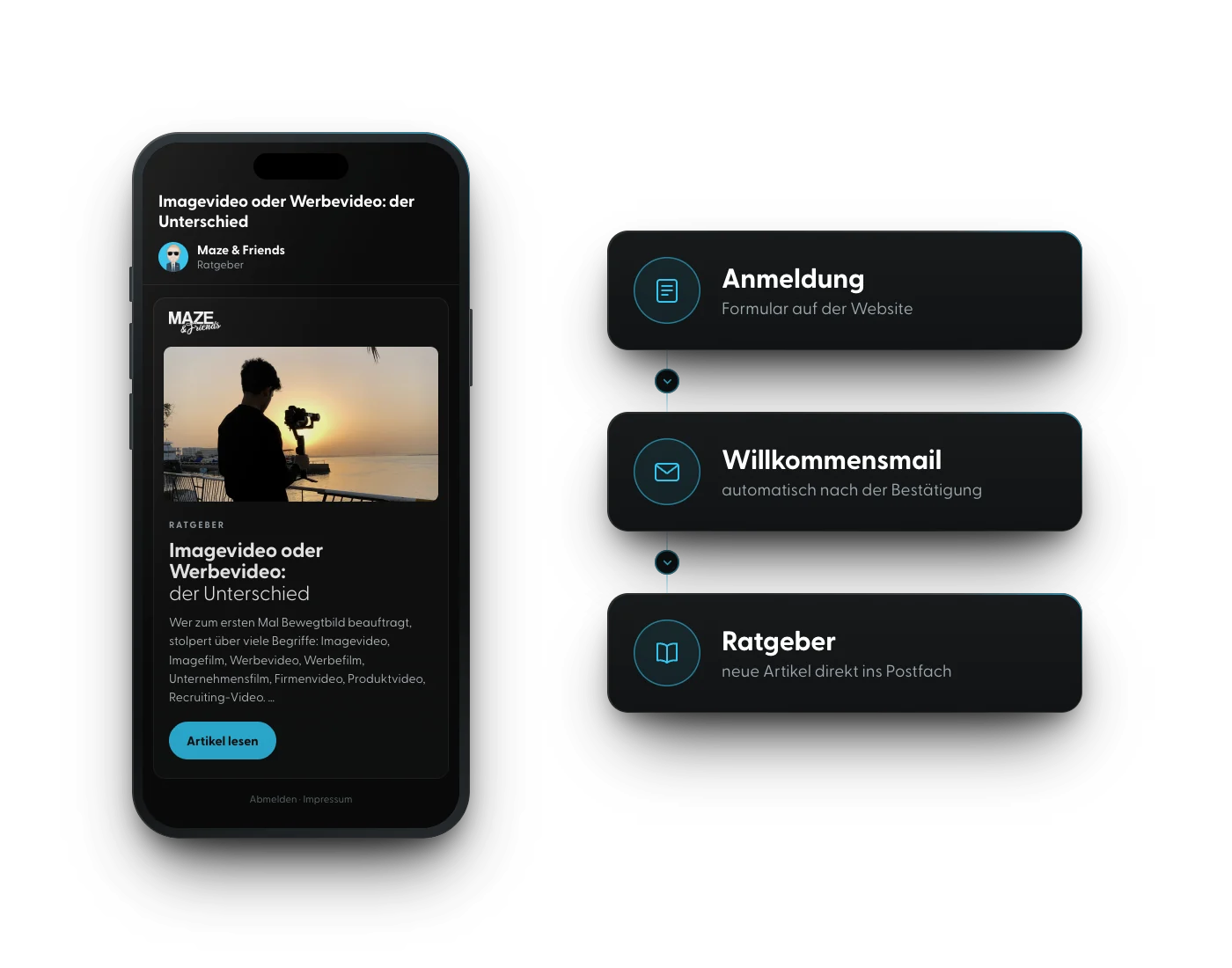
Welcome, basket, post-purchase, win-back: automations respond to what a contact does and send the right message at the right moment. For Canal Toys Deutschland, we built automations from the welcome to the win-back.
Instead of catch-all emails with whatever happens to be lying around, every campaign gets an occasion and a message. We write subject lines short and in the language of the people who read them, and where the list is big enough, we test two variants against each other.
Someone who has bought twice gets a different message from someone who signed up yesterday. Segments, meaning groups based on behaviour or interest, make sure content fits the recipient.
An email in the spam folder has as good as never been sent. For sender authentication, we set up SPF, DKIM and DMARC, the technical records that inboxes such as Gmail use to check whether an email really comes from you. Contacts who haven’t responded for a long time are taken out of the send.
A list grows through a good reason to sign up, such as a checklist or a guide to download. Confirmation by double opt-in, meaning a click in a confirmation email, makes every consent verifiable. At Planungsbüro Grassl, guides with checklists and a newsletter flow are part of the same plan.
Every month you see which campaign and which automation brings revenue or enquiries. We treat open rates with caution, because some email apps trigger opens automatically.
First we look at your list and existing tools and tell you where the biggest lever lies. Then you get a fixed-price quote.
We check the sender records and the data flow from shop or CRM first. Nothing is sent until the basics are right.
Which automation responds to which behaviour, and what each email should achieve, is set down in writing before we write. You approve the plan.
We design a template in your brand’s look and write the copy in your voice. You approve every email before it goes live.
The automations go live step by step, and campaigns start with tests, of two subject lines, for example.
Every month we show revenue or enquiries per email and expand whatever works.
Email marketing works with people who already know you. It rarely wins new contacts on its own; that takes content that gets found, or campaigns that bring sign-ups. We plan both alongside it, through content marketing and our performance marketing service.
The inbox isn’t entirely unfiltered either. Spam filters and promotions tabs help decide whether an email is seen, which is why deliverability and clean lists are part of our basic set-up, before the first campaign is even written.
On data protection and consent, we implement cleanly on the technical side, but we don’t give legal advice. Assessing your sign-up flow and privacy policy is a job for your data protection officer or a specialised law firm.
With the right post-purchase flow, every purchase is the start of the next order. A welcome discount alone is rarely enough; what decides is content that explains products and fits the brand.
A lot of time often passes between first contact and contract. A flow with expert knowledge and case studies keeps you in the conversation without your sales team constantly having to follow up by phone.
Tickets and registrations have a deadline. We plan invitations and reminders backwards from that date, and after the event a flow with the aftermovie and photos keeps the contact alive until the next edition.
Industries
Regions
The questions people ask before deciding on email marketing & automation, and the answers that bring clarity.
Email marketing is targeted communication with customers and prospects by email, as a newsletter or as an automated message. The aim is to nurture relationships and turn them into purchases or enquiries. Unlike social media, you own the channel: the contact list sits with you, and no algorithm decides who sees your message. Recipients’ consent is the prerequisite.
Marketing automation means software sends messages automatically as soon as a contact does something specific, such as signing up or buying. Typical examples are a welcome flow or a reminder about an abandoned basket. Once set up, these flows run in the background and reach every contact at the right moment. They still need looking after, because offers and copy go out of date.
An email marketing agency builds and runs newsletters and automations, from the technology to the copy. That includes set-up in the sending system, sender records for deliverability, templates in the brand design, segments and reporting. At Maze & Friends, the content comes from the same team that also produces film and guides, and success is measured by revenue and enquiries.
Which newsletter tool suits you depends on where your data comes from and what should be automated. For online shops, a system with tight shop integration makes sense; there we work with Klaviyo, for example. In B2B, the connection to the CRM, meaning your sales team’s customer database, is what counts. Our recommendation depends on your setup, and the tool is set up in your name.
A newsletter should go out regularly, but only when there is an occasion. For many online shops, a fixed rhythm with campaigns for the season and new products works; in B2B, one send a month with real expert knowledge is often enough. More important than frequency is that unsubscribes and spam complaints stay low. If they rise, it is a signal to write less often or more selectively.
Email marketing can be GDPR-compliant if recipients have given consent beforehand and can unsubscribe at any time. In practice, that means a sign-up form with double opt-in, meaning confirmation by email, and an unsubscribe link in every message. We implement this cleanly on the technical side. The legal review is a job for your data protection officer or a specialised law firm.
You measure the success of email marketing by revenue or enquiries per email, not by open rates. Opens are unreliable, because Apple Mail triggers them automatically to protect privacy, which makes the figures look too high. Clicks and the purchases or enquiries that can be attributed to a campaign say more. For that, we connect the sending tool with the shop and analytics.
More technical terms, briefly explained: Marketing glossary
Show us your list and your sending tool. In a free strategy call, we clarify which automation makes sense first and what is missing for it. Then you get a fixed-price quote.











 Make your trade fair leads count

 Promote your event until it sells out