



Recruiting videos that get applications
Recruiting videos: what makes a good employer video, how production works, what drives the cost and which mistakes put candidates off applying.
In short: A recruiting video (also called an employer branding video or employer video) shows in 60 to 120 seconds what it is really like to work at your company: with real employees, real workplaces and real statements. The job ad stays. The video answers the question that comes before it: “Do I even want to work there?” Good recruiting videos lower the barrier to applying. Maze & Friends from Vienna produces recruiting videos with short cuts for the careers page and social ads.
You know the pattern: a drone flight over the company building, smiling people at the meeting table, a voice saying “At our company, people come first”, the logo at the end. Videos like this cost money and, at worst, signal: “We are interchangeable.” This guide covers what makes a recruiting video work, how production runs, what drives the costs and which mistakes to avoid.

What is a recruiting video and how does it differ from a brand film?
A recruiting video is aimed at potential employees, a brand film at customers and partners. That sounds obvious, but the two get mixed up all the time. The result is a film that serves both audiences a little and neither of them properly.
| Recruiting video | Brand film | |
|---|---|---|
| Target group | Candidates, often passive job seekers | Customers, partners, the public |
| Core question | “What is it like to work here?” | “Why should I buy here?” |
| Lead roles | Employees from everyday work | Service, results, leadership |
| Place in the funnel | Careers page, job ad, social ads | Website, sales, trade fairs |
| Tone | Approachable, concrete, honest | Positioning, self-assured |
The two are often produced in the same period, because a well-planned shoot day delivers material for both. Edit, messaging and distribution, however, have to be thought through separately.

How do you recognise a good recruiting video?
From production practice with industrial and mid-sized companies, the principles that work can be boiled down to five points.
1. Real employees instead of actors, and the right ones. For a shift supervisor job, a shift supervisor is the most credible ambassador. The marketing manager cannot replace that. Applicants want to see their future surroundings, people like them, in situations like theirs. A slightly nervous real fitter beats any trained presenter, because people believe him.
2. Concrete statements instead of value poetry. “Flat hierarchies” is a claim. “If a jig doesn’t suit me, I rebuild it, that’s my call” is proof. The real art of the production lies in the interview: asking questions so that people get concrete, and having the patience to wait for the real sentence. The filming is then quickly done.
3. Show the environment honestly. A factory floor is loud, a building site dusty, an office sometimes chaotic. Retouch that away and you produce the resignation during the probation period at the same time. Reality puts off the wrong candidates, the right ones stay, and that is exactly what saves everyone time.
4. Designed short, vertical and subtitled. The careers page is only one of its places. The video also runs as a 30-second cut in social media ads, vertically on a phone, usually without sound. How short the window is in ads is shown by the overview of video ad formats in the Google Ads help centre (in German): skippable ads on YouTube can be clicked away after 5 seconds. If you do not factor this into the concept and shoot, you produce a format that does not work on the channels with the widest reach. More on this in the article on social recruiting.
5. A clear next step. At the end it has to be clear what to do: how to apply, who to contact, ideally with a name and a face. “careers.examplecompany.at, and if you’re not sure, just give Petra a call” converts better than any cliché about “exciting challenges”.
How does the production of a recruiting video work?
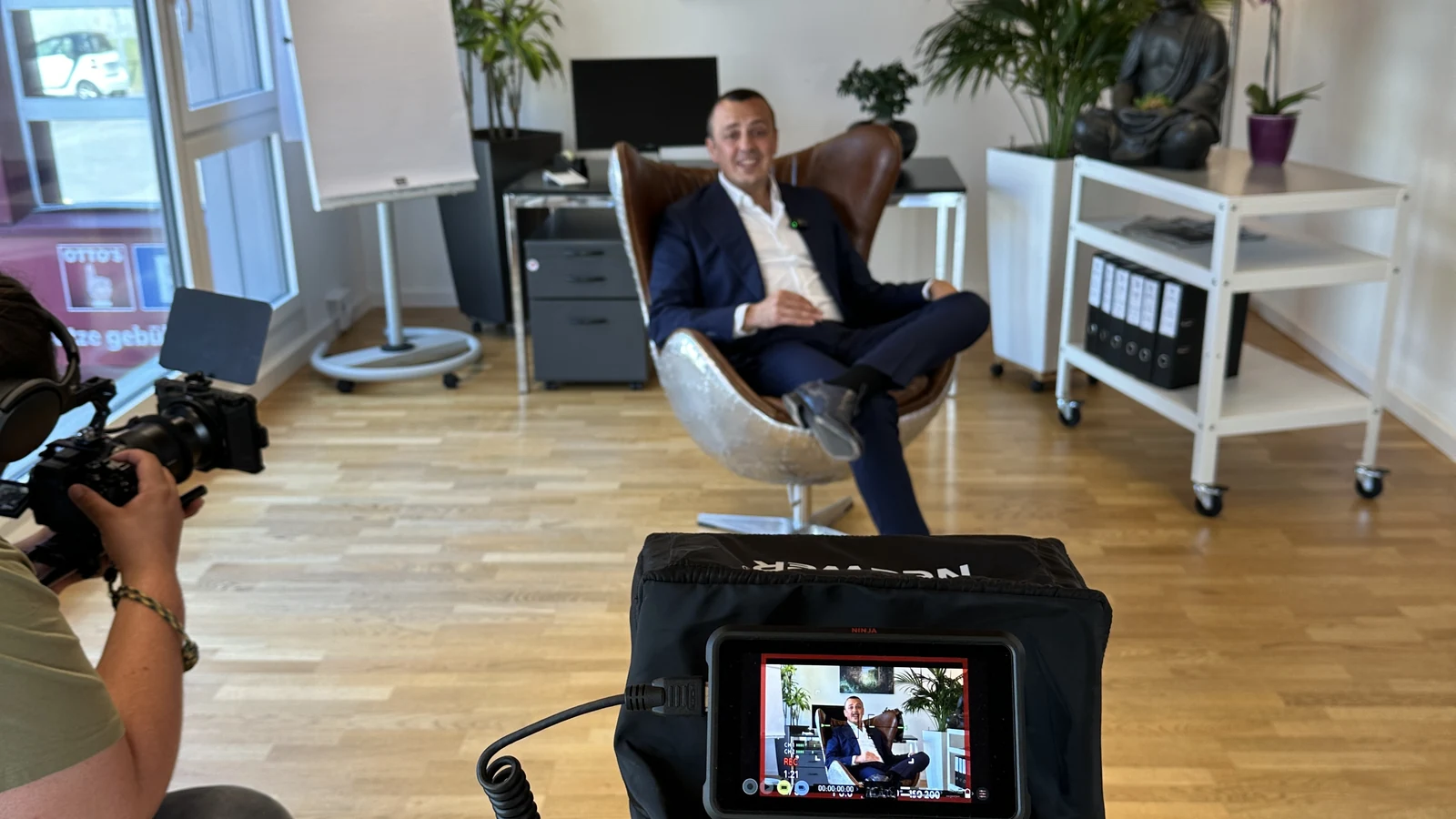
A professional production follows a clear process. The camera only comes in late:
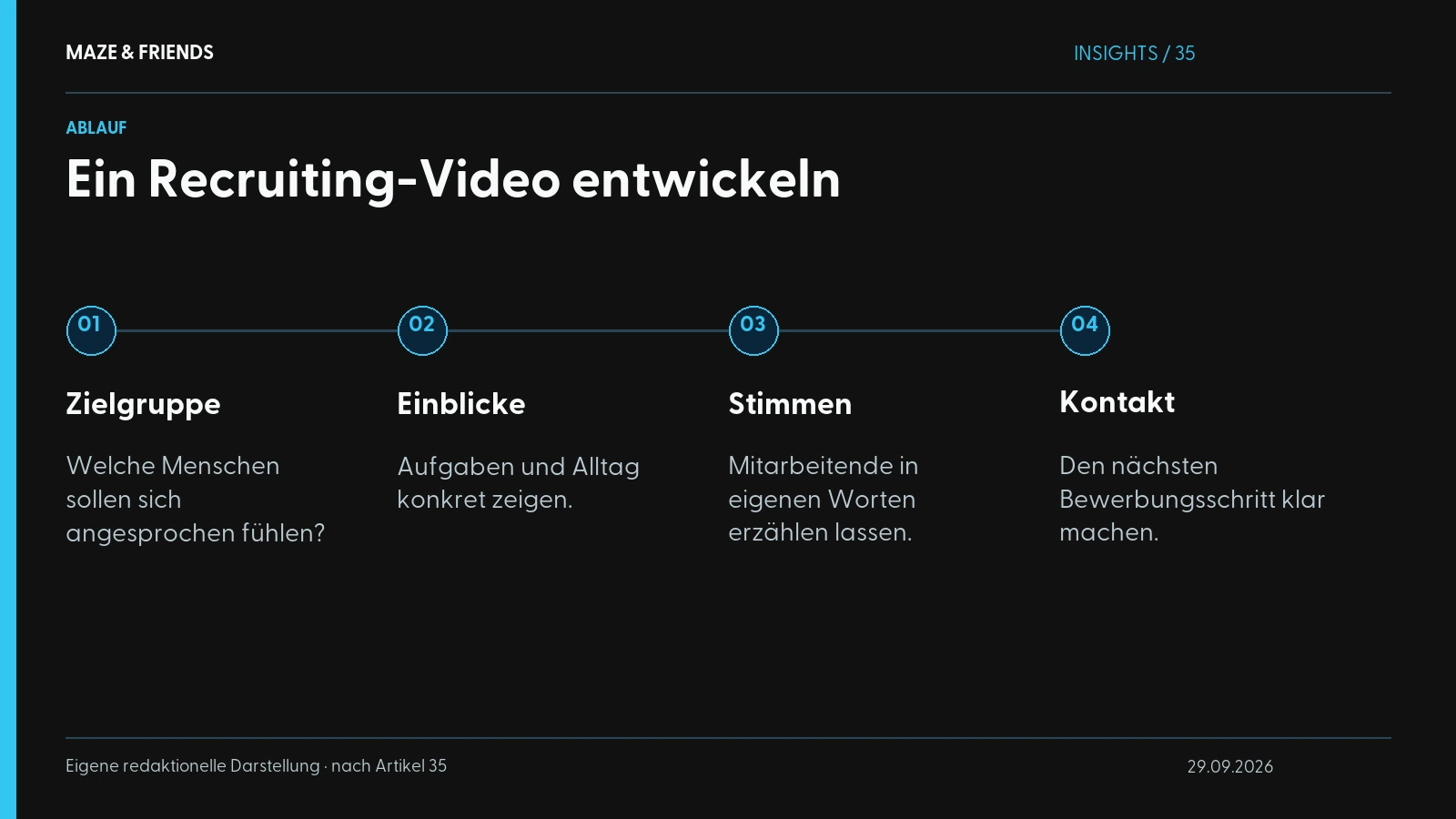
- Defining the goal: which positions are hardest to fill? Exactly who should the video reach? A video “for everyone” reaches no one. When in doubt, make two short videos for two target groups rather than one long one for none.
- Substance interviews: conversations with employees before any shoot day. This is where the key statements come from; the shoot later only captures them.
- Concept & shooting schedule: which people, which locations, which situations. Good planning decides whether one shoot day is enough.
- Shoot day(s): usually one to two days on site. Interviews come first, while people are fresh. Work situations are filmed documentary-style, not staged.
- Edit & feedback: main version plus short formats for social and ads. Two feedback rounds are standard and should be included in the quote.
- Distribution: careers page, job ads, trade fairs and above all social campaigns, as we set them up in social media marketing. The best video has no effect if it just sits on YouTube and waits.
What does a recruiting video cost?
What a recruiting video costs depends on the number of shoot days, the number of edited versions and the production standard. A well-planned shoot day can deliver the main video, short cuts and photos all at once. Maze & Friends produces recruiting videos as part of its video production work and provides a fixed quote after the initial call.
Two calculations belong alongside it. What does an unfilled skilled position cost per month in lost orders, overtime and downtime? And what does a bad hire cost who leaves again after four months? Measured against both figures, a good recruiting video is one of the most cost-effective measures in HR.
Why do recruiting videos fail?
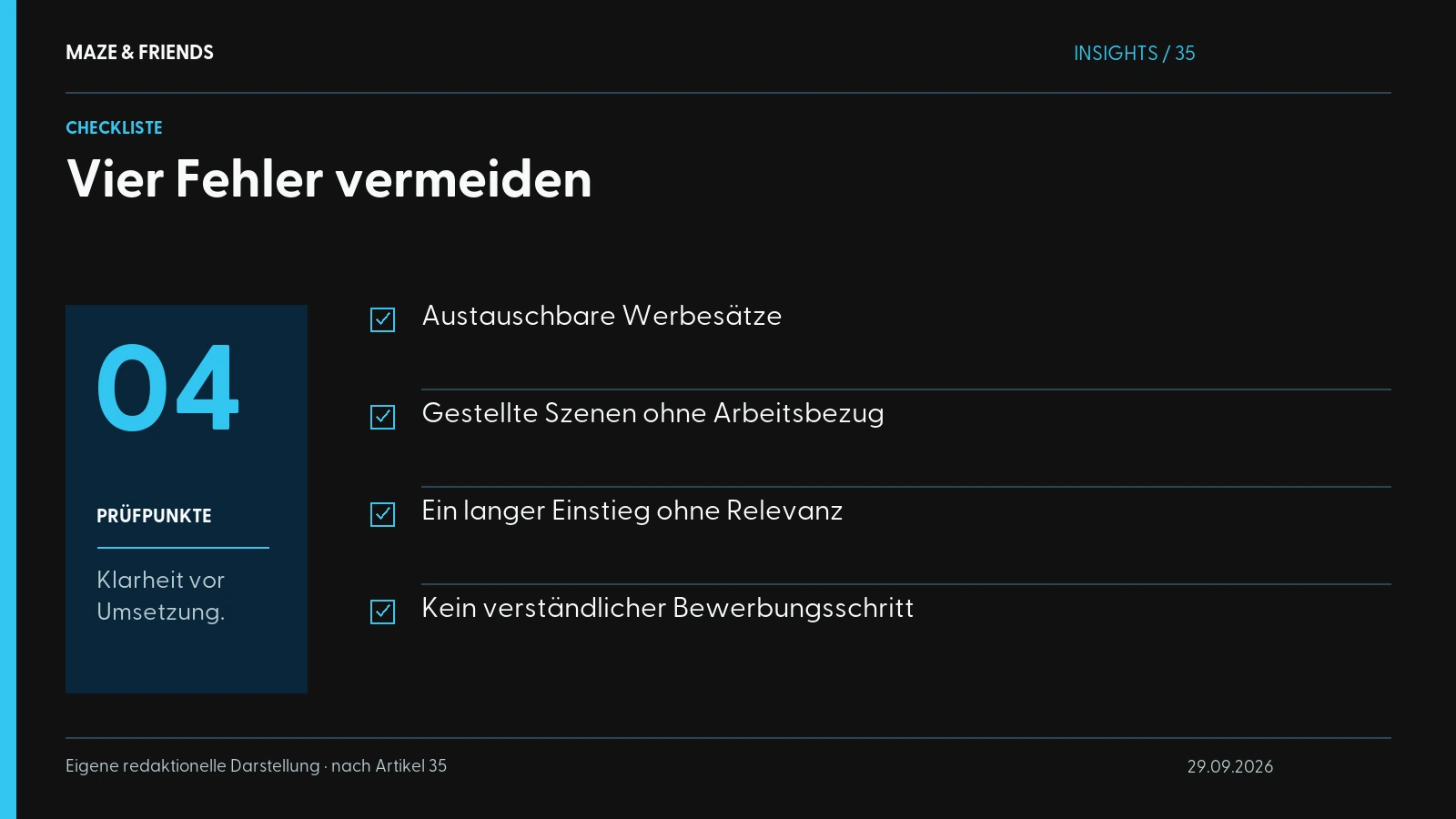
- The video hides. It sits on the careers page and nowhere else. Without active distribution via ads, social, email signatures and trade fairs, it only reaches people who were already interested.
- Management talks, employees stay silent. Applicants want to see future colleagues. The managing director may appear, as host and without the lead role.
- Produced once, used for five years. When half of the people shown no longer work at the company, the effect turns into the opposite. A realistic usage horizon is two to three years, with short annual updates from new material. Then there is the legal side: if you obtain consent for the footage, employees can withdraw it at any time under Article 7(3) GDPR (in German).
- Perfection instead of truth. The slicker the video, the lower its credibility. Documentary authenticity is the standard on every platform today, with natural light, real sounds and real speech.
One building block of three
An effective recruiting video shows real employees with concrete statements, is designed with social media in mind and is actively distributed. On its own, though, it will not go far. The strategy behind it is covered in employer branding explained, distribution in social recruiting, and where everything comes together is shown in the careers page as a landing page.
From the studio: ONO Bowl & Tea: content and employee spot · Aviation Academy Austria: brand film, reels and performance marketing.
Frequently asked questions
What is meant by a recruiting video?
A recruiting video is a short film for potential employees. In 60 to 120 seconds it shows what it is really like to work at your company.
It shows real employees, real workplaces and real statements. It does not replace the job ad. It answers the question that comes before it: “Do I even want to work there?” Done well, it lowers the barrier to applying. Staged scenes, stock phrases and stock-music optimism raise it, because they feel interchangeable. Related terms are employer branding video, employer video and employee video.
How does a recruiting video differ from a brand film?
A recruiting video is aimed at potential employees, a brand film at customers and partners. One shows what it is like to work here, the other why you should buy here.
Everything else follows from that. In the recruiting video, employees from everyday work play the lead roles; in the brand film, service, results and leadership take centre stage. The recruiting video runs on the careers page, in job ads and social ads, the brand film on the website, in sales and at trade fairs. A well-planned shoot day delivers material for both. You still think through edit, messaging and distribution separately.
Is an employer branding video the same as a recruiting video?
Largely, yes. Employer branding video, employer video and recruiting video are mostly used interchangeably, while “employee video” describes the format in which employees tell the story themselves.
If you do separate them, an employer branding video contributes more to the employer brand as a whole, a recruiting video more to specific positions and target groups. In practice, the most effective recruiting video is almost always an employee video, because statements from colleagues are more credible than any corporate message. For planning, what counts is who the video should reach and where it will run. The name is secondary.
What makes a good recruiting video?
A good recruiting video shows real employees with concrete statements in their real working environment and ends with a clear next step.
Five principles have proven themselves with industrial and mid-sized companies:
- The right real employees instead of actors, for example a shift supervisor for a shift supervisor job
- Concrete statements instead of value poetry such as “flat hierarchies”
- Show the environment honestly, even if the factory floor is loud
- Designed short, vertical and with subtitles for social media
- A clear way to apply with a contact person, ideally with a name and a face
Reality puts off the wrong people. That saves everyone time.
What should employees say in a recruiting video?
They should describe in their own words, concretely, what they do, what they get to decide themselves and why they have stayed.
“Flat hierarchies” is a claim. “If a jig doesn’t suit me, I rebuild it, that’s my call” is proof. A sentence like that cannot be learnt by heart. It comes from good interviewing, with questions that make people concrete and the patience to wait for the real sentence. Benefits, too, only work when they are concrete: someone describing how further training actually works is more convincing than any mention of “attractive benefits”.
How long should a recruiting video be?
The main version 60 to 120 seconds: long enough for substance, short enough for the attention span.
It should come with short cuts of 15 to 30 seconds for ads and social media, edited vertically and with subtitles, because on a phone they usually run without sound. A single three-minute video without short formats is half a production. It does not work on the channels with the widest reach. Plan the short cuts into the concept and shoot from the start.
How do I create a recruiting video?
In six steps: clarify the goal, interview employees, draw up a shooting schedule, shoot, edit and distribute in a targeted way.
It starts with the question of which positions are hardest to fill and who the video should reach. Then come conversations with employees, from which the key statements emerge, and a shooting schedule with people, locations and situations. Filming usually takes one to two days on site, interviews first, while everyone is fresh. The edit produces the main version and short formats, with two feedback rounds as standard. After that, the real work begins: distribution.
What costs should I expect for a recruiting video?
The costs depend mainly on the number of shoot days, the number of edited versions and the production standard.
One shoot day with one main video is the smallest level, several shoot days with target-group cuts and a social package the larger one. Set against that what an unfilled skilled position costs per month in lost orders and overtime, and what a bad hire costs who leaves again after four months. Measured against both figures, a good recruiting video is one of the most cost-effective measures in HR.
Can we just shoot a recruiting video ourselves on a phone?
For everyday social media content, yes. For the central video on the careers page and in paid campaigns, a professional production is worth it.
That has less to do with the camera than with interviewing, sound and editing. Poor sound is a common reason why home-made videos get abandoned. In everyday content, on the other hand, authenticity beats polish, and simple, real phone clips from the workplace are ideal there. The strongest approach combines a professionally produced core with ongoing home-made everyday content that complements the video for months.
What if employees do not want to be on camera?
Transparency helps: explain in advance exactly what will be asked and guarantee that nothing will be used without approval.
Participation must be voluntary, no exceptions. Reluctance, however, is usually uncertainty rather than refusal. Interviews work best as a conversation without memorised lines. Someone who does not want to speak can often still be shown at work, provided they agree. Every company has enough voices, and the reluctant ones often come forward of their own accord once they see the first result.
Which mistakes should you avoid with recruiting videos?
Missing distribution, management as the main character, using it for too long and too much perfection.
- The video hides on the careers page and only reaches people who were already interested
- The managing director talks, the employees stay silent; he belongs in the picture as host
- Produced once, used for five years, even though half of the people shown have left
- The slicker the video, the lower its credibility
The current standard on every platform is documentary authenticity: natural light, real sounds, real speech.
Where should I publish a recruiting video?
On the careers page, in job ads and above all in paid social media campaigns. Without active distribution, it only reaches people who are already interested.
On the careers page, it works best in the top third. For Meta or LinkedIn, you need short, vertical edits with subtitles, served specifically to target groups around your location. Add trade fairs and email signatures. The best video has no effect if it just sits on YouTube and waits.
Does a recruiting video also work for apprentices and young target groups?
Yes, if it runs as a vertical short format on the platforms where young people actually spend their time.
The careers page alone barely reaches this target group. In terms of content, the same principle applies as with skilled workers: real apprentices, real tasks, real language. Youthfulness dreamt up by adults does not work. It is most credible when apprentices from the company show what their everyday life looks like themselves, and when the application process afterwards works on a phone in a few minutes.
How long can you use a recruiting video?
Realistically two to three years, ideally with short annual updates from new material.
After that, the effect often turns into the opposite, at the latest when a large share of the people shown no longer work at the company. Plan several employees in from the start rather than building the video around a single person. Before the shoot, clarify in writing what the footage may be used for and for how long, and what applies if someone leaves the company. The legal details are best clarified with your data protection or legal adviser.
What types of recruiting video are there?
Employee interviews, “a day in the life of” formats, apprentice videos, staged scenes and animations.
For most mid-sized companies, the documentary format works best: real employees at real workplaces, telling it in their own words. People believe it because they see people instead of reading claims. Staged spots require more effort and quickly look contrived. Animations are better suited to explaining processes such as how to apply. Per video, the rule is one target group, one core message. Two short videos for two target groups are better than one long one for none.
Next step
Want to know which of this fits your company? We will work it out together in 30 minutes. Free and without obligation.
Pick a time