


Social recruiting reaches those not looking
Social recruiting explained: how to reach skilled workers on Meta and LinkedIn who are not actively looking. Process, cost logic and typical mistakes.
In short: Social recruiting is hiring via social networks: with organic careers content and paid job campaigns on Meta (Facebook, Instagram) or LinkedIn. Unlike job boards, it reaches people who are not actively looking but would switch if the right offer appeared in their feed. Maze & Friends from Vienna delivers social recruiting with a recruiting video and campaigns in the area around your location.
If your job ads sink without trace, the position is rarely to blame. Usually it is the place. Job boards only reach people who are actively looking, and with skilled workers in demand, they are the smallest group. The electrician, the shift supervisor, the project manager you really want have a job and do not read job ads. In the evening, though, they scroll through Instagram and Facebook, and that is exactly where social recruiting comes in. Here you can read how it works, what drives the costs, when it pays off and which mistakes make campaigns fail.

What is social recruiting, and what is it not?
Social recruiting (also called social media recruiting) covers every way in which companies win employees through social networks. It has two levels that belong together:
| Level | What happens | Effect |
|---|---|---|
| Organic | Regular insights into everyday work: team, projects, people | Builds the employer brand, makes campaigns credible |
| Paid | Targeted job campaigns shown to defined target groups in their feed | Brings in applications for specific positions predictably |
At heart, the organic level is social media marketing with a careers focus: a channel that regularly shows what things look like at your company and so makes every later job campaign more credible.
Simply sharing the job ad on your Facebook page does not count. A job ad PDF in the feed is the same ad in the wrong place. Active sourcing, meaning contacting individual candidates directly, is something else too. Social recruiting reverses the direction: instead of writing to a hundred people one by one, you make sure the right hundred see you and the suitable five get in touch.
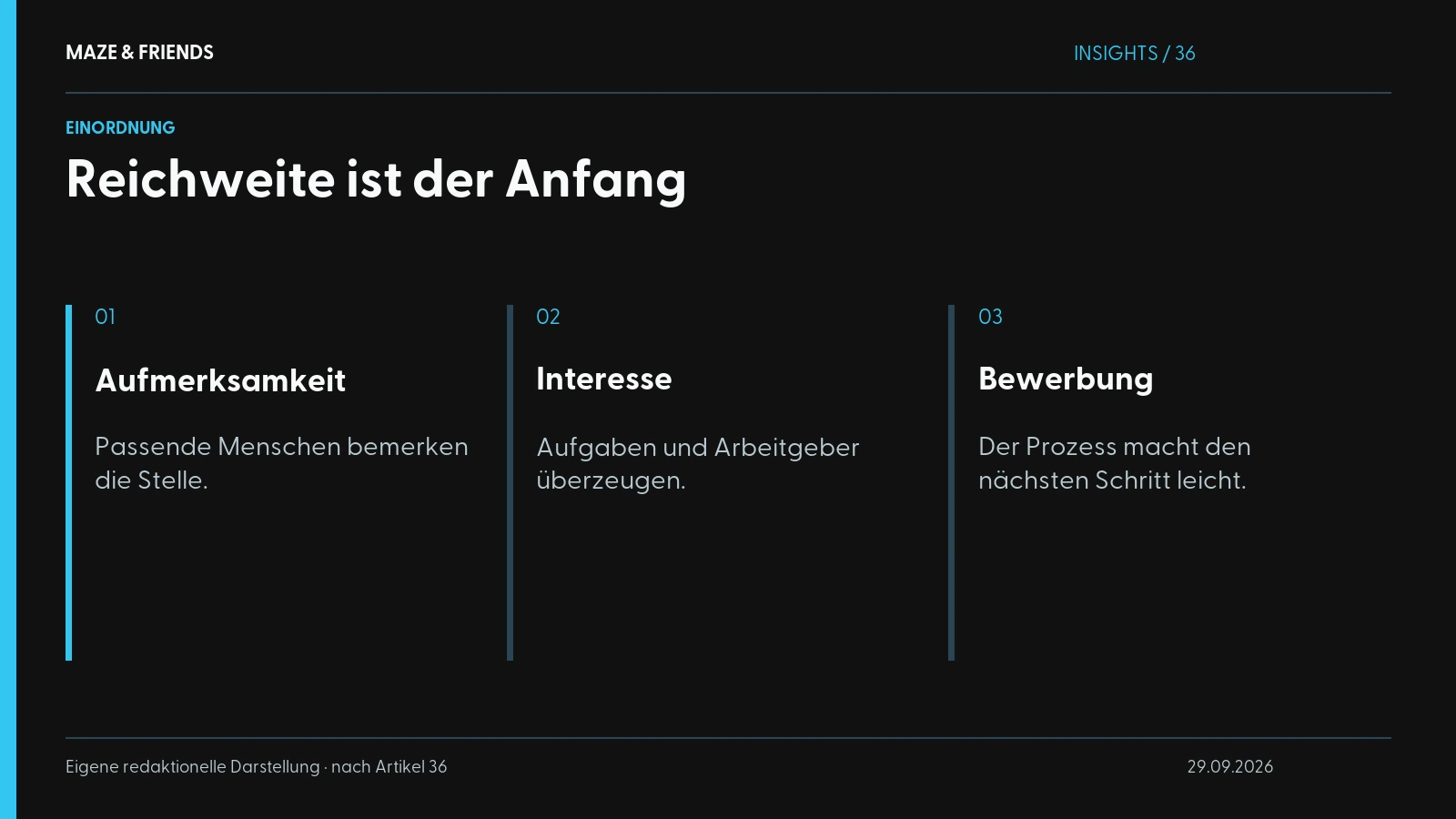
Why does social recruiting work?
Well-made campaigns deliver results where job boards fail. Three mechanisms explain why:
1. The market of people who are not looking. Most qualified skilled workers are in employment, and hardly any of them are actively looking. A considerable share of them, however, are latently open to a move, unhappy with the commute, the management or the lack of development. No job board reaches these people, because they never look there. A good feed post reaches them while they scroll in the evening.
2. Targeting instead of wasted reach. On the advertising platforms, campaigns can be narrowed down precisely by region and interest, for example to the area around the location, suitable professional characteristics and relevant interests. A campaign for mechatronics technicians within a radius of 40 kilometres lands in exactly the feeds where it belongs instead of spreading across the whole country.
3. The barrier is low. With classic application routes, a cover letter, a CV and a login stand between “interesting” and “applied”. Good social recruiting campaigns lead to short forms: name, contact details, two qualifying questions, done. Set the barrier low and you get more conversations. Selection then happens in the conversation, where it belongs.

What does social recruiting cost?
Social recruiting has two cost blocks.
The advertising budget goes directly to the platforms. How much a position needs depends on the occupation, region and competition. Occupations with shortages cost more, because more companies compete for the same feeds.
Implementation covers content production (video, photos), campaign set-up and ongoing optimisation, done in-house or via an agency. Maze & Friends provides a fixed quote for this after the initial call.
A market signal for context: the cost per click for the search term “Social Recruiting” itself is just under €24 in Google Ads, with top bids above €27 (Germany, as of 2026). If providers pay that much for a single click, the method evidently works well enough for this sales effort to pay off. Anyone who masters it themselves instead of buying it in at a high price therefore has a structural cost advantage.
The most important benchmark is internal. What does a month with an unfilled position cost you, and what does a recruitment agency fee cost, which is often several months’ salaries? Measured against both references, a properly set-up campaign is often the cheaper option per actual hire.
How does an effective campaign work?
- Define the target group precisely. “We’re looking for people” is not enough. The question is: which person, with which qualifications, within which radius, with which likely motive for switching? The motive for switching matters most, because it becomes the core message.
- Produce material that does not look like an ad. The feed is teeming with advertising, and only authenticity stands out there. Short videos of real employees regularly and clearly beat graphic tiles with bullet points. The article on recruiting videos explains how material like this is made.
- Set up the campaign. The platform depends on the target group (Meta dominates for skilled trades and technical roles, LinkedIn joins in for graduate and commercial roles, and for very young target groups TikTok is worth a look). Then come the audience set-up and a short application form instead of a redirect to an applicant management portal that forces a login.
- Respond quickly. This rule is the most underestimated. People who get in touch via a social campaign were curious and by no means desperate. After 48 hours without a reply, the contact has gone cold. A call back on the same day has a say in your hiring rate.
- Measure and sharpen. Cost per application, quality of conversations, hires. After two weeks you can see which message and which motive work. Then budget is shifted, instead of simply letting the campaign run on.

Why do social recruiting campaigns fail?
- Ads without a foundation. Run campaigns with an empty profile and a dead careers page and you burn budget. Interested people check you out and find nothing. The careers page has to be in place before the first euro is spent.
- Job ad language in the feed. “We offer a dynamic environment with flat hierarchies” stops no thumb. “We finish at 12 on Fridays, honestly” does.
- A slow process behind it. If the first reply to an application takes three weeks, even the best campaign fails. Social recruiting commits you to speed.
- A one-off instead of a system. A campaign for an emergency vacancy works, but costs more than necessary, because the brand starts from zero. Stay present over time and you pay less per application with every campaign. That is why employer branding and social recruiting belong together, as strategy and tool.
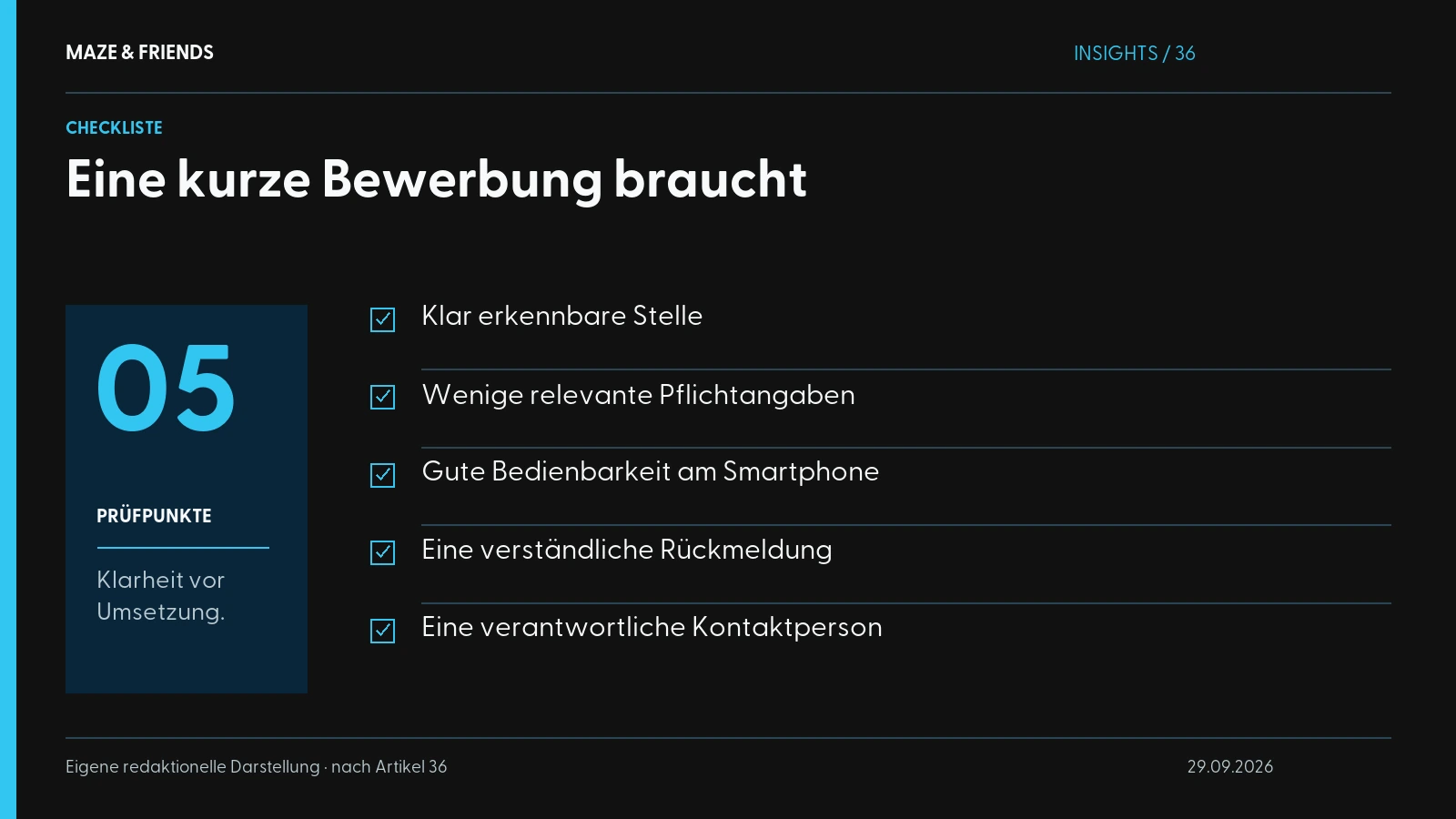
Material, careers page, call back
Social recruiting reaches the skilled workers who do not read job boards, if three things are right: real material, a careers page that delivers what the ad promises, and quick call backs. The strategy behind the campaigns is explained in employer branding explained. The recruiting video guide describes the most important advertising asset, and the careers page as a landing page shows where the clicks should lead.
From the studio: Aviation Academy Austria: brand film, reels and performance marketing · ONO Bowl & Tea: content and employee spot.
What “professional” means on social media today and how the algorithm and content are connected is something Manuel Zellnig put into context in an interview with Ghezzo (in German).
Frequently asked questions
What is meant by social recruiting?
Social recruiting is hiring via social networks such as Facebook, Instagram or LinkedIn, with organic careers content and paid job campaigns.
Unlike job boards, it reaches people who are not actively looking at all but would switch if the right offer appeared in their feed. That is the vast majority of the labour market. You will often also hear social media recruiting, which means the same thing. Simply sharing a job ad as a PDF in the feed does not count. It remains the same ad in the wrong place.
What is the difference between social recruiting and active sourcing?
Active sourcing approaches individual candidates directly. Social recruiting works with reach, so that suitable people get in touch themselves.
The direct route, for example via a LinkedIn message, takes a lot of effort per contact and works mainly for specialists. With social recruiting you reverse the direction: instead of writing to a hundred people one by one, you make sure the right hundred see you and the suitable five get in touch. For most skilled worker profiles, that is considerably more efficient per hire. For rare specialists, the two methods complement each other.
Which platform is best for social recruiting?
The platform where your target group spends its free time. Whether it feels like an HR channel does not matter.
For skilled trades and technical occupations, there is hardly any way around Meta with Facebook and Instagram. LinkedIn adds to that for specialist and management positions in graduate and commercial roles. For apprentices and very young target groups, TikTok can be a fit, but it requires its own formats rather than recycled ads. Better to run one or two platforms properly than four half-heartedly. After two weeks, you check your choice against the cost per application.
What are the pros and cons of social media recruiting?
The biggest advantage is reach among people who are not looking. On the downside, without good material and quick responses it burns budget.
Add to that precise regional targeting, a low application barrier thanks to short forms and first applications often within a few days. On the other side are ongoing advertising budgets, the effort for content that does not look like an ad, and the obligation to be fast, because after 48 hours without a reply a contact has gone cold. Social recruiting is no miracle cure. No campaign makes up for a missing careers page or an unattractive offer.
What costs should I expect for social recruiting?
Two cost blocks: the advertising budget that goes directly to the platforms, and implementation with content production, campaign set-up and ongoing optimisation.
How large the advertising budget per position needs to be depends on the occupation, region and competition. Occupations with shortages cost more, because more companies compete for the same feeds. You handle implementation in-house or via an agency. An internal benchmark says the most: what does a month with an unfilled position cost, and what does a recruitment agency fee cost, which is often several months’ salaries?
What are examples of social media recruiting?
A typical example is a campaign for mechatronics technicians within a radius of 40 kilometres, with a short video of real colleagues and an application form designed for phones.
Effective examples have three things in common. They address a concrete motive for switching, such as the commute, the management or a lack of development. They never sound like a job ad: “We finish at 12 on Fridays, honestly” stops the thumb, “dynamic environment with flat hierarchies” does not. And they lead to a short form with name, contact details and two qualifying questions instead of a portal that forces a login.
How does a social recruiting campaign work?
In five steps: define the target group precisely, produce real material, set up the campaign, respond quickly and sharpen.
- Target group: which person, which qualifications, which radius, which motive for switching
- Material: short videos of real employees instead of graphic tiles with bullet points
- Set-up: platform chosen by target group, a short form instead of a portal with a login
- Response: call back on the same day if possible; after 48 hours a contact has gone cold
- Sharpening: compare messages after two weeks and shift budget
The motive for switching matters most. It becomes the core message of the ads.
How quickly does social recruiting deliver results?
Paid campaigns often deliver first applications within a few days. A campaign can be reliably assessed after two to four weeks.
Compared with purely organic growth, fast impact is the strength of paid campaigns. After about two weeks, you can see which message and which motive for switching work, and budget is then shifted. The organic level with regular insights into everyday work takes effect more slowly. In return, it lowers campaign costs permanently, because the employer brand no longer starts from zero with the next position.
Which metrics show whether social recruiting is working?
Three above all: cost per application, quality of conversations and actual hires.
Clicks and reach are only preliminary stages. What will count is how many applications lead to a conversation and how many of those lead to a hire. That gives you the cost per hire as an honest benchmark against job boards or recruitment agencies. Also measure the time to the first call back, because it has a say in your hiring rate. After two weeks, you evaluate and move budget to the messages that bring in suitable applications.
Does social recruiting also work for small businesses?
Yes, especially for small businesses, because they compete regionally, where even small budgets are enough for a noticeable presence.
A business with 20 employees recruits within a radius of 30 kilometres, not nationwide. In the feed, the personal touch of a small team is an advantage, because it stands out from slick corporate advertising. What matters is a careers page that is in place before the first euro is spent, and someone who answers responses on the same day. Ensure both and you do not need a large recruiting team.
Do we need video for social recruiting, or are images enough?
Images work. Video usually works better, because it conveys atmosphere and gets more attention in the feed.
It does not have to mean a big production effort. The strongest approach is a mix of a professionally produced core, such as a recruiting video with short cuts, and simple, real phone clips from everyday work. Short videos of real employees regularly and clearly beat graphic tiles with bullet points. Pay attention to vertical formats and subtitles, because most videos in the feed run without sound.
What are the most common mistakes in social recruiting?
Ads without a foundation, job ad language in the feed, a slow application process and one-off actions instead of a system.
Without a careers page and a well-maintained profile, interested people check you out, find nothing and drop off. Clichés such as “dynamic environment” stop no thumb. If the first reply takes three weeks, the best campaign is worthless. And a campaign for an emergency vacancy works, but costs more than necessary, because the brand starts from zero. That is why employer branding and social recruiting belong together, one as the strategy, the other as the tool.
Should you do social recruiting yourself or hire an agency?
Doing it yourself works if you can secure campaign know-how, time for content and quick call backs internally. Otherwise an agency for production and campaigns pays off.
The method demands three things at once: material that does not look like an ad, a clean campaign set-up with ongoing optimisation, and a process that picks up applications immediately. If you master that internally, you have a structural cost advantage. When assessing providers, check whether they report cost per application and hires rather than just clicks, and who owns the ad account and the data. No agency will make the quick call back for you anyway.
What recruiting methods are there besides social recruiting?
Mainly job ads on job boards, active sourcing, recruitment agencies, employee referrals and your own careers page with speculative applications.
Job boards only reach people who are actively looking, which with skilled workers in demand is the smallest part of the market. Active sourcing suits rare specialists. Recruitment agencies help with urgent vacancies, but often charge a fee of several months’ salaries. Employee referrals are inexpensive but limited in volume. Social recruiting closes the gap to those open to a move who are not looking. All routes end on the careers page, so it has to be in place before you invest in any channel.
What legal requirements apply to social recruiting?
The same rules apply as for any job advertisement, plus data protection for all data that comes in via application forms.
In Austria, a job advertisement must be worded in a gender-neutral way and, under Section 9 of the Austrian Equal Treatment Act (Gleichbehandlungsgesetz, in German), state the minimum pay under the applicable collective agreement, together with any willingness to pay above that minimum. In principle, this also applies to ads in the feed. In Germany, the General Equal Treatment Act (AGG) likewise requires non-discriminatory job advertisements. Forms are subject to the GDPR: only ask for what you need for the application, provide clear information and do not store data longer than necessary. Clarify retention periods with your legal adviser.
Next step
Want to know which of this fits your company? We will work it out together in 30 minutes. Free and without obligation.
Pick a time
Manuel Zellnig has been building visibility for companies since 2018: brand film, personal branding, performance marketing and AI visibility. Qualified advertising specialist (Werbeakademie Wien), Bachelor in Business Management (Carinthia University of Applied Sciences), author of the book ‘Mobile Apps zur Messung der Kundenzufriedenheit’ (2017, in German) and creative expert for the Austrian Economic Chamber (WKO) in two transformation guides. He measures before he recommends and writes here about what actually works in projects.
Publications and interviews: WKO transformation guide for printers (in German) · WKO transformation guide for florists (in German) · Interview with Ghezzo (in German) · ‘Heute’ on Viennese start-ups (in German)